
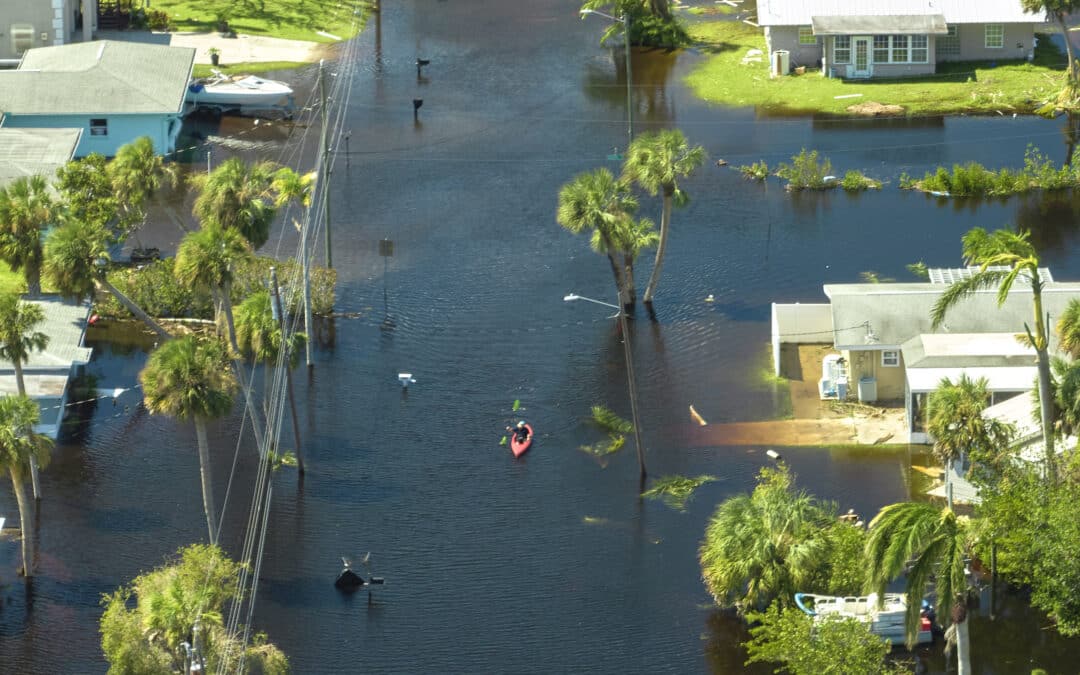
Flood insurance helps protect homeowners from financial losses caused by flooding, which is usually not covered by a standard homeowners policy. Homeowner’s insurance may protect against many common risks, but flood damage typically requires a separate flood insurance policy. Flood insurance is designed to help cover direct physical damage to a home and belongings when rising water, storm surge, heavy rain, or other flood events cause damage. FEMA explains that most homeowners insurance does not cover flooding, which makes flood insurance important for homeowners in areas with water-related risks.
Flood Risks
Flood risk depends on location, elevation, drainage, rainfall patterns, storm surge exposure, nearby waterways, and local development. Coastal communities can face added risk from heavy rainfall, hurricanes, tropical storms, and storm surge. Homeowners should review flood maps and speak with an insurance professional to understand whether their property may need flood coverage beyond a standard homeowners policy. FEMA provides a Flood Map Service Center that helps property owners find official flood maps and flood hazard information, which makes flood risk zones important to check before choosing coverage.
Coastal flooding can become especially dangerous when storm surge pushes water inland during tropical systems. NOAA explains that areas along the Gulf Coast, especially Louisiana and Mississippi, are particularly vulnerable to storm surge because the ocean floor gradually deepens offshore, which makes storm surge risk an important concern for homeowners near the Gulf.
The National Flood Insurance Program
The National Flood Insurance Program, or NFIP, is managed by FEMA and provides flood insurance to property owners, renters, and businesses in participating communities. Homeowner’s insurance usually does not cover flood damage, which is why many property owners need a separate flood policy for rising water, storm surge, and heavy rainfall losses. NFIP pricing can depend on factors such as flood risk, building characteristics, elevation, coverage amount, and location. FEMA explains that homeowners can insure a residential building for up to $250,000 and belongings for up to $100,000 through the NFIP, which makes NFIP flood insurance coverage important to review before buying a policy.
Private Flood Insurance Options
Private flood insurance may be another option for homeowners who want to compare coverage, pricing, limits, and policy features outside the NFIP. These policies are offered by private insurance companies and may differ from NFIP policies in coverage limits, exclusions, waiting periods, deductibles, and claim terms. Homeowners should compare both options carefully because the best fit depends on the property, mortgage requirements, flood risk, and coverage needs. FEMA explains that flood insurance is available through the NFIP or some private insurance companies, which makes private flood insurance worth discussing with an insurance professional.
Assessing Your Flood Insurance Needs
Figuring out how much flood insurance coverage is needed starts with understanding the property’s flood risk, rebuilding costs, mortgage requirements, and the value of personal belongings. FEMA’s Flood Map Service Center can help homeowners review official flood map information for a specific property. Homeowners should also consider whether building coverage, contents coverage, or both are needed because flood damage can affect walls, floors, electrical systems, furniture, appliances, and personal items. FEMA provides official flood maps and flood hazard information through the Flood Map Service Center, which makes flood zone review an important step before choosing coverage.
The Waiting Period
Flood insurance should be purchased before storm season or heavy rain threatens the area. Many NFIP policies do not take effect immediately, which means homeowners should not wait until floodwaters are close to buy coverage. Planning ahead helps avoid gaps during the period between policy purchase and the effective date. FEMA explains that there is typically a 30-day waiting period from the date of purchase before an NFIP policy goes into effect, which makes flood insurance waiting period rules important to understand.
Making a Flood Insurance Claim
Filing a flood insurance claim is easier when homeowners document damage quickly and contact their insurer as soon as it is safe. Photos, videos, damaged item lists, receipts, and repair estimates can help support the claim. An adjuster may inspect the property, prepare a damage estimate, and help explain the next steps in the claim process. FEMA explains that the flood insurance claims process includes starting the claim, preparing for inspection, working with the adjuster, and documenting the loss, which makes flood insurance claims preparation important after a flood.
- Homeowners should document the damage with photos and videos before cleanup begins, when it is safe to do so.
- Homeowners should contact their insurance company or agent as soon as possible to start the claims process.
- An adjuster may inspect the property, review the damage, and prepare an estimate for the homeowner to review.
- Homeowners should review the claim settlement carefully and ask questions before accepting or signing claim documents.

Mitigation Measures to Reduce Premiums
Flood mitigation measures can help homeowners reduce flood risk and may also help lower insurance costs depending on the property and policy details. Homeowner’s insurance usually does not cover flood damage, so reducing flood risk and reviewing flood insurance options should be part of a broader home protection plan. Elevating utilities, improving flood openings, raising mechanical systems, and using flood-resistant materials can help limit damage when water enters or surrounds a property. FEMA explains that elevating a building or installing proper flood openings in a crawlspace may help reduce flood damage and potentially decrease the cost of flood insurance premiums.
Additional Considerations and Exclusions
Flood insurance policies should be reviewed carefully because coverage limitations can affect what homeowners receive after a flood. Standard flood insurance may not cover temporary housing, additional living expenses, valuable papers, outdoor property, or certain damage caused by moisture, mildew, or mold that could have been avoided. Homeowners should ask an insurance agent about building coverage, contents coverage, deductibles, exclusions, and whether private flood insurance offers additional options. FEMA’s National Flood Insurance Program explains that temporary housing and additional living expenses are not covered by a standard flood insurance policy.
Key Takeaways About Flood Insurance
Flood insurance can help protect homeowners from expensive damage caused by rising water, storm surge, heavy rainfall, and other flood events. Homeowners should not assume a standard homeowner’s insurance policy covers flooding because flood protection usually requires a separate policy. Reviewing mitigation options, exclusions, waiting periods, coverage limits, and claim requirements can help homeowners make stronger decisions before flood damage occurs.
- Flood insurance is usually separate from standard homeowner’s insurance.
- Mitigation measures such as elevating utilities, improving flood openings, and using flood-resistant materials may reduce damage and insurance costs.
- NFIP policies have coverage limits for buildings and contents, so homeowners should review whether those limits are enough.
- Standard flood insurance may not cover temporary housing, additional living expenses, outdoor property, or certain preventable moisture damage.
- Homeowners should review flood maps, compare NFIP and private flood insurance options, and speak with an insurance professional before choosing coverage.
FAQ About Flood Insurance
Does homeowner’s insurance cover flood damage?
Most standard homeowner’s insurance policies do not cover flood damage. Homeowners usually need a separate flood insurance policy through the NFIP or a private insurer.
Can flood mitigation lower insurance costs?
Flood mitigation may lower insurance costs when improvements reduce the property’s flood risk. Elevating the home, raising utilities, improving flood openings, and using flood-resistant materials may help reduce potential damage.
What does flood insurance usually cover?
Flood insurance may cover direct physical damage to the insured building and certain belongings, depending on the policy. Homeowners should review building coverage, contents coverage, deductibles, and exclusions before buying.
What does flood insurance usually exclude?
Flood insurance may exclude temporary housing, additional living expenses, outdoor property, valuable papers, business interruption, and certain moisture or mold damage that could have been prevented.
When should homeowners buy flood insurance?
Homeowners should buy flood insurance before storm season or heavy rain threatens the area. NFIP policies usually have a waiting period before coverage becomes active.
Should homeowners compare NFIP and private flood insurance?
Homeowners should compare NFIP and private flood insurance because coverage limits, exclusions, deductibles, pricing, and waiting periods may differ between policies.
- About the Author
- Latest Posts

With over 80 years of combined experience, Southern Ambit Insurance stands as an authority in simplifying the complex world of insurance. Our team is committed to providing exceptional customer service, conducting thorough risk assessments, and crafting tailored policies that offer our clients the best protection and peace of mind.